
Sizes of Gold
In the words of Tom Massie, son of the late George “Buzzard” Massie, founder of the Gold Prospectors Association of America: “My favorite way of prospecting is the way that gets me gold.”
Gold prospecting can take a number of forms, but some of the simplest methods are still among the most popular. Gold panning is a good way to sample material and work smaller amounts of gravel, while a sluice box lets you work more material once you’ve found a promising area. Highbanking along the shore keeps you a little warmer and drier while still allowing you to process a good amount of material.
No matter which method you prefer, there is nothing quite like getting out in the field and finding some gold for yourself!
Common Gold Sizes and Terms
- Specimen: A naturally formed piece of gold or gold-bearing quartz valued partly for its natural form.
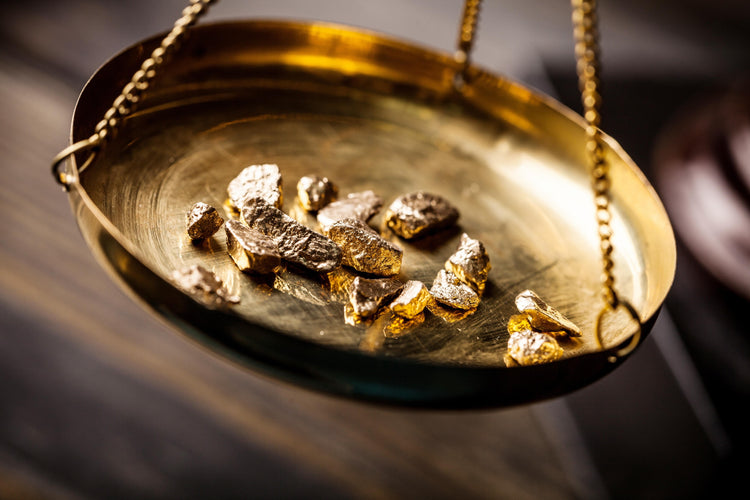
- Nugget: A naturally formed lump or piece of gold large enough to be easily handled and typically larger than a picker.
- Picker: A piece of visible gold large enough to easily pick up with your fingers
- Flake: A visible piece of gold that is easy to spot but generally difficult to pick up with your fingers.
- Fines: Small particles of gold that are generally too small to pick up individually with your fingers.
- Gold Dust: Very fine particles of gold that resemble dust
- Flour: Extremely fine gold particles that may be difficult to see without close inspection.
- Micron Gold: Extremely small particles of gold measured in microns and generally too small to see individually with the naked eye.
- Color: A general prospecting term for visible gold found in a pan or sample, usually referring to smaller pieces rather than nuggets.